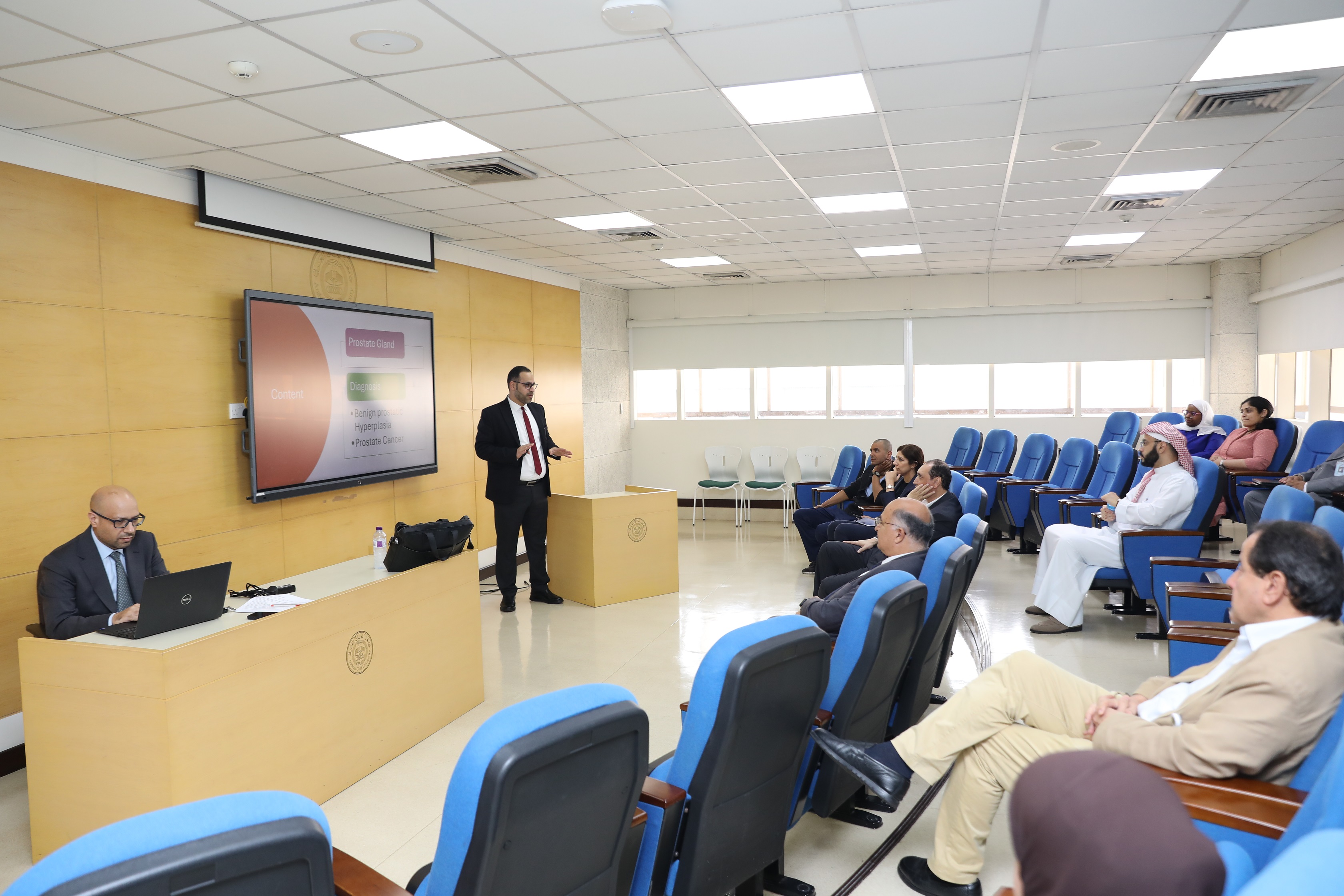
Prostate Cancer Symposium under the King Fahd Academic Chair
Arabian Gulf University
22 Dec, 2025
As part of the activities of the King Fahd bin Abdulaziz Al Saud Academic Chair for Medical Biotechnology at Arabian Gulf University, the College of Medicine and Health Sciences recently organized a specialized scientific symposium entitled “Scientific Insights into Prostate Cancer”, with the participation of a distinguished group of academics and researchers specialized in this field.
The symposium included three scientific papers that addressed the latest research, diagnostic, and therapeutic developments related to prostate cancer. Consultant urologist at Salmaniya Medical Center, Dr. Qasim Al Faraj, presented a paper entitled “Diagnostic Insights into Prostate Diseases: Differentiating Benign Enlargement from Cancer”, in which he reviewed the clinical and diagnostic differences between benign and malignant cases, highlighting current and future diagnostic methods, the latest risk classification techniques, and the use of advanced MRI imaging to enhance diagnostic accuracy.
Additionally, Associate Professor of Biochemistry at Arabian Gulf University, Dr. Mahmoud AlFaqih, presented a paper entitled “Molecular Mechanisms of Resistance to Androgen Deprivation Therapy”, in which he discussed the challenges related to the development of tumor resistance to hormonal therapy—a cornerstone in the treatment of advanced prostate cancer—explaining how a deep understanding of these molecular mechanisms can lead to the development of next-generation treatments for castration-resistant prostate cancer.
The symposium concluded with a paper presented by the Director of the Clinical Research Center at Arabian Gulf University, Professor Dr. Khalid Greish, entitled “Enhancing Prostate Cancer Treatment through Rational Design of Nanocarriers”. He reviewed promising research results in the field of nanomedicine aimed at overcoming drug resistance and minimizing side effects, through the development of advanced nanodrug formulations that improve drug solubility, accurately target cancer cells, inhibit tumor growth, prevent the formation of tumor-feeding blood vessels, while preserving the integrity of healthy tissues.
This symposium reflects Arabian Gulf University’s commitment to supporting advanced scientific research, strengthening the integration between academic research and clinical applications, and promoting the exchange of scientific expertise among researchers and faculty members, contributing to the development of