AGU Innovation Management Student Uses AI to Introduce Islamic Numismatics in Museums
Arabian Gulf University
19 Jan, 2026
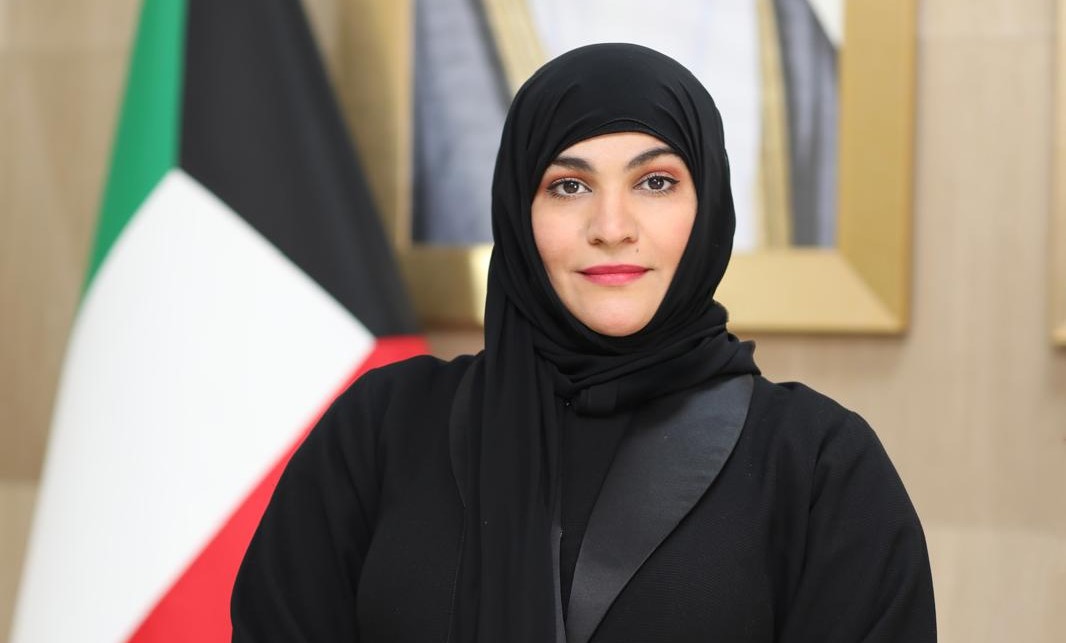
From museum halls to classrooms in the Innovation Management programme at the College of Education, Administrative and Technical Sciences at Arabian Gulf University (AGU), PhD student Fadila Mohammed Habib presented a student project employing artificial intelligent (AI) technologies to enhance the visitor experience in museums. Developed in collaboration with the al-Sabah Collection (Dar al-Athar al-Islamiyyah) in Kuwait, a comprehensive collection of Islamic and pre-Islamic artifacts spanning from Spain to China, this initiative goes beyond traditional displays and ventures into intelligent interaction.
Fadila Habib combined the authenticity of heritage with modern technology by focusing on Islamic coinage as a field of knowledge. She reimagined its forms and historical significance through an interactive digital format, creating an innovative video powered by AI, opening new horizons for museums in the digital age.
Straddling a rich past and contemporary technological advancements, her project exemplifies how heritage can be revitalised through innovation to enhance visitor experience in museums. It reintroduces Islamic numismatics in a modern, interactive manner, aligning with the expectations of today’s visitors and challenging traditional display models. The project effectively links artifacts to their historical and cultural contexts in a creative and nearly unprecedented way.
Fadila explains, "The study of Islamic numismatics is essential for understanding the economic, political, and cultural history of the Muslim world. Each coin provides precise indication of identity, culture, and the development of arts and civilisations among Muslims throughout the ages. With digital advancements, employing AI to revive this field is a qualitative step toward preserving heritage in innovative and interactive ways, enabling museums to convey knowledge to visitors in more engaging and impactful ways."
She adds, "This project falls within the vision of the Gulf Cooperation Council countries, which aim to promote creative industries and innovation in the knowledge economy. It also aligns with Sustainable Development Goals, particularly those related to innovation, quality education, and cultural heritage preservation, by developing innovative museum models that enhance their educational and cultural roles."
Fadila selected a series of caliphs, sultans, and emperors from various coinage periods to feature in an interactive video. In her initial project, she highlighted the coinage of Umayyad Caliph Abd al-Malik ibn Marwan, during whose reign the first Arab dinar was minted, as well as the coinage of Nasrid Caliph Yusuf ibn Ismail I, a period marked by the flourishing of Islamic architecture exemplified by the Alhambra Palace in Granada.
For her second project, she focused on the Mughal era, one of the most diverse periods in terms of coinage. She featured a coin of Emperor Jahangir ibn Akbar for its artistic and cultural features, including inscriptions, poetry, and astronomical motifs. She also examined a coin of his wife, Nur Jahan, one of the rare women whose name appears on Islamic coins.
These student projects are part of the Innovation Management Programme at AGU to fulfil graduation requirements. They serve as models that connect academic learning with the cultural industry through interactive museum displays. These initiatives contribute to enhancing the experience of museum visitors and archaeology enthusiasts, supporting scientific research, and offering innovative, sustainable solutions with cultural and developmental significance. They reflect the new generation’s awareness of the vital role of technology in preserving and developing cultural heritage.