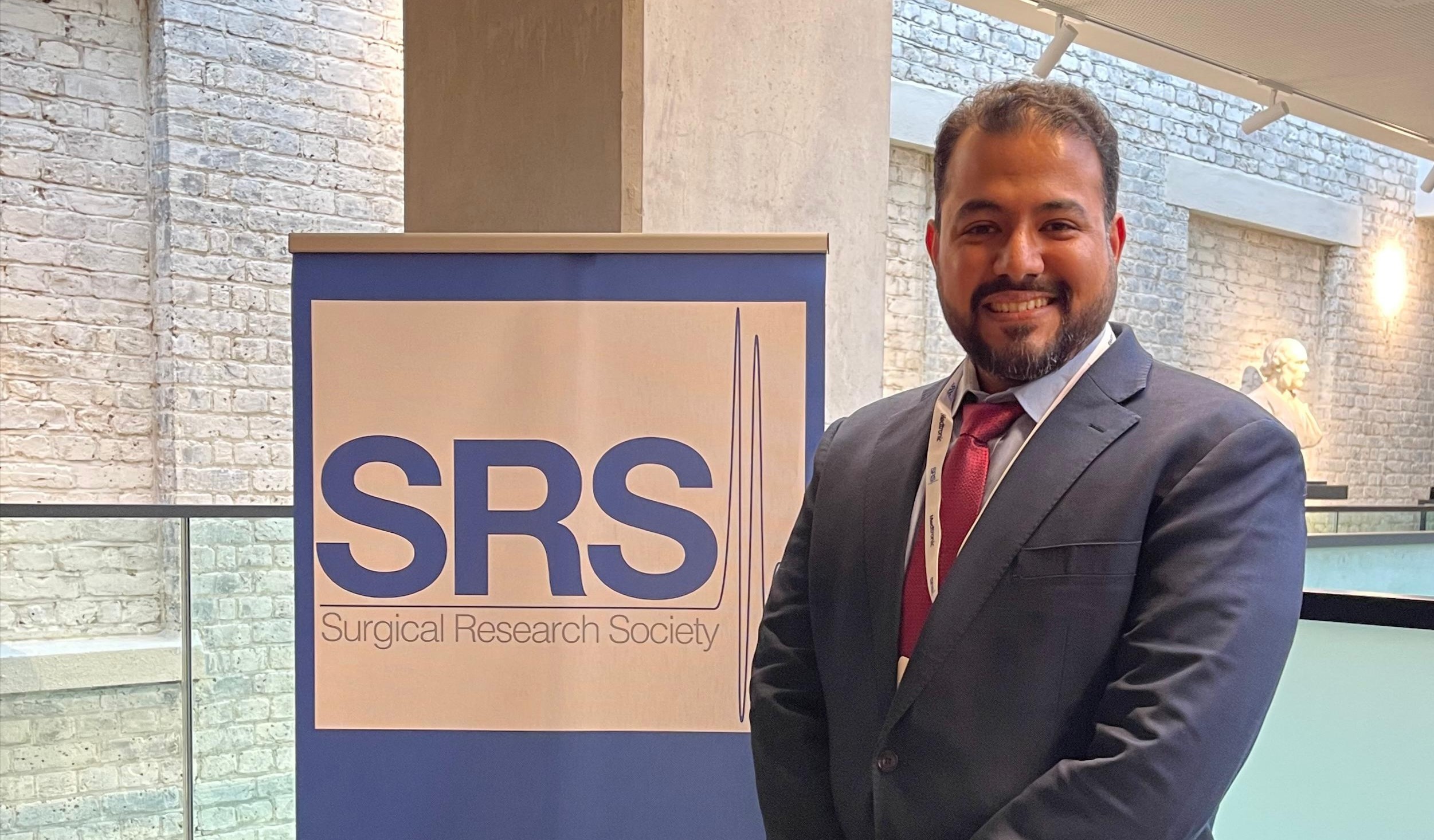
AGU Academic Discusses the Impact of Linguistic Discrepancy on Surgical Communication Quality at SRS 2026 Annual Meeting
Arabian Gulf University
18 Jan, 2026
Dr Abdullah Ismail Mohammed, Assistant Professor and Head of the Surgery Department at the College of Medicine and Health Sciences, Arabian Gulf University (AGU), participated in the Society of Surgical Research (SRS) Annual Meeting held this January at the historic headquarters of the Royal College of Surgeons in the UK. He delivered a lecture addressing a crucial aspect of surgical practice in the Arab region titled "The Impact of the Discrepancy Between the Language of Medical Education and the Language of Clinical Practice on the Quality of Communication with Patients."
The lecture highlighted the practical challenges faced by junior surgeons when transitioning from an English-based educational environment to clinical settings that require effective communication in Arabic. Dr Abdullah explained that this language gap not only hampers the explanation of medical procedures but also affects the development of trust between doctors and patients, a crucial component of safety in surgical practice.
During his presentation, he discussed the importance of integrating Arabic medical communication skills into surgeons' training programmes, noting that enhancing these skills raises healthcare quality and ensures genuine informed consent, in line with international ethical standards.
The lecture received significant attention from attendees due to its relevance to the quality of surgical practice in multilingual environments and the practical solutions it proposed to enhance professional competence amid cultural and linguistic challenges.
The lecture highlighted the practical challenges faced by junior surgeons when transitioning from an English-based educational environment to clinical settings that require effective communication in Arabic. Dr Abdullah explained that this language gap not only hampers the explanation of medical procedures but also affects the development of trust between doctors and patients, a crucial component of safety in surgical practice.
During his presentation, he discussed the importance of integrating Arabic medical communication skills into surgeons' training programmes, noting that enhancing these skills raises healthcare quality and ensures genuine informed consent, in line with international ethical standards.
The lecture received significant attention from attendees due to its relevance to the quality of surgical practice in multilingual environments and the practical solutions it proposed to enhance professional competence amid cultural and linguistic challenges.