SCH Chairman, Ministers and Officials Inspect Progress of King Abdullah bin Abdulaziz Medical City Project
Arabian Gulf University
10 Dec, 2025
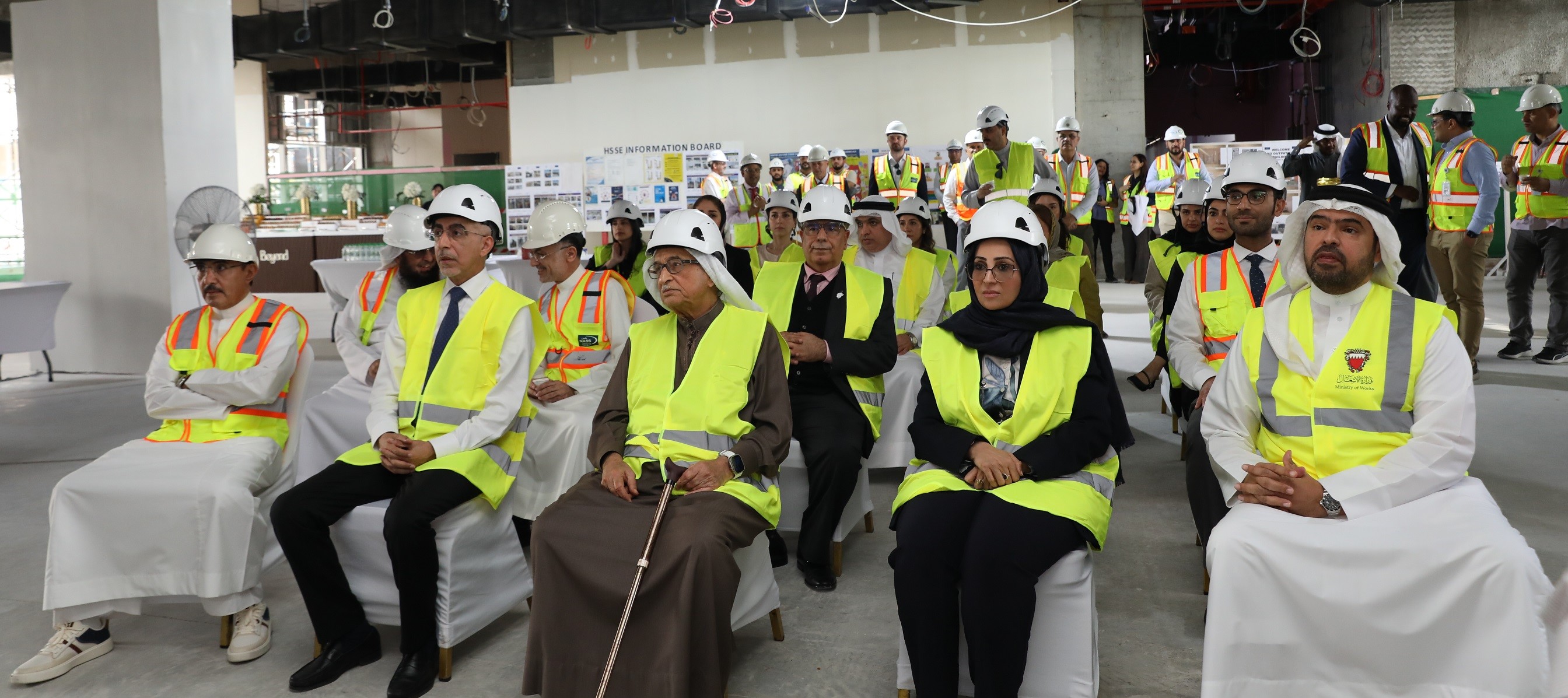
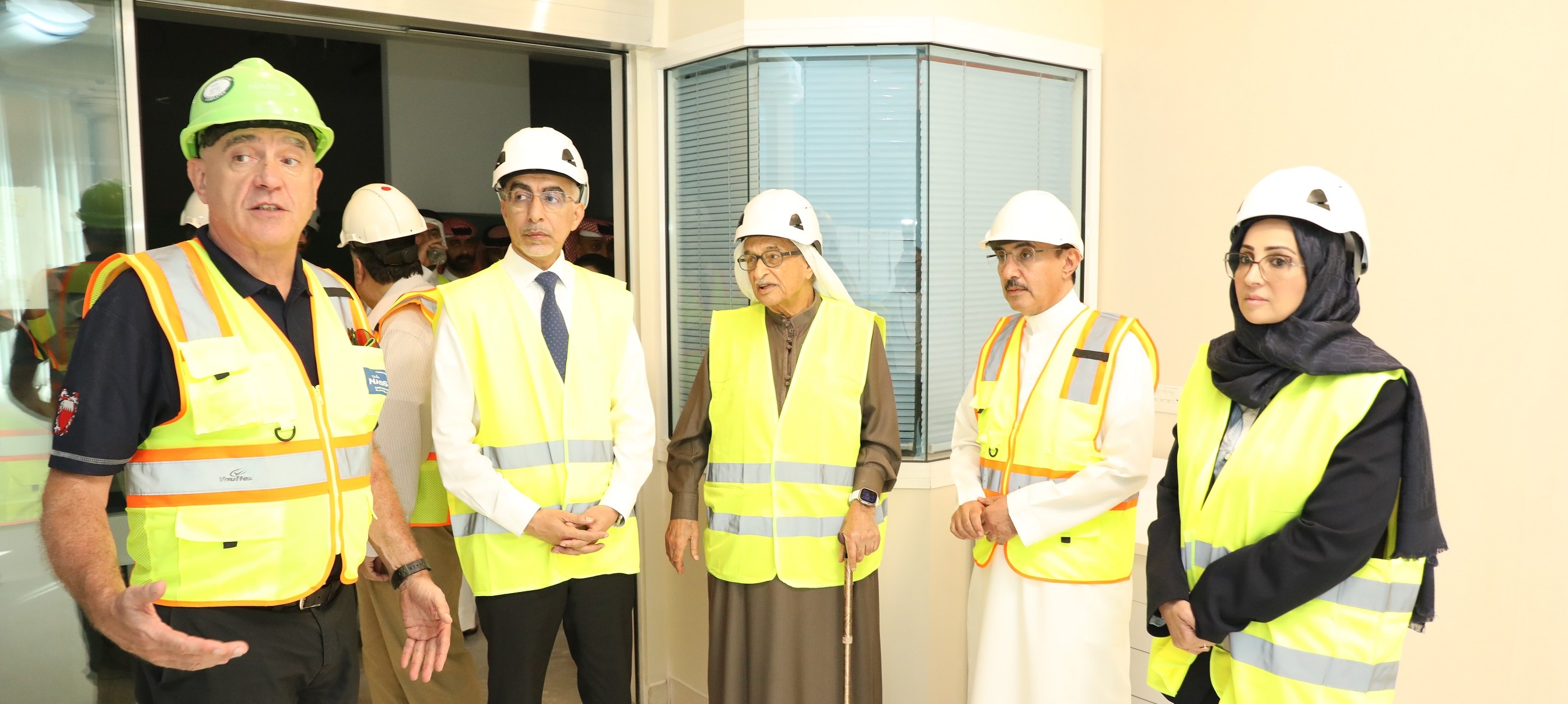
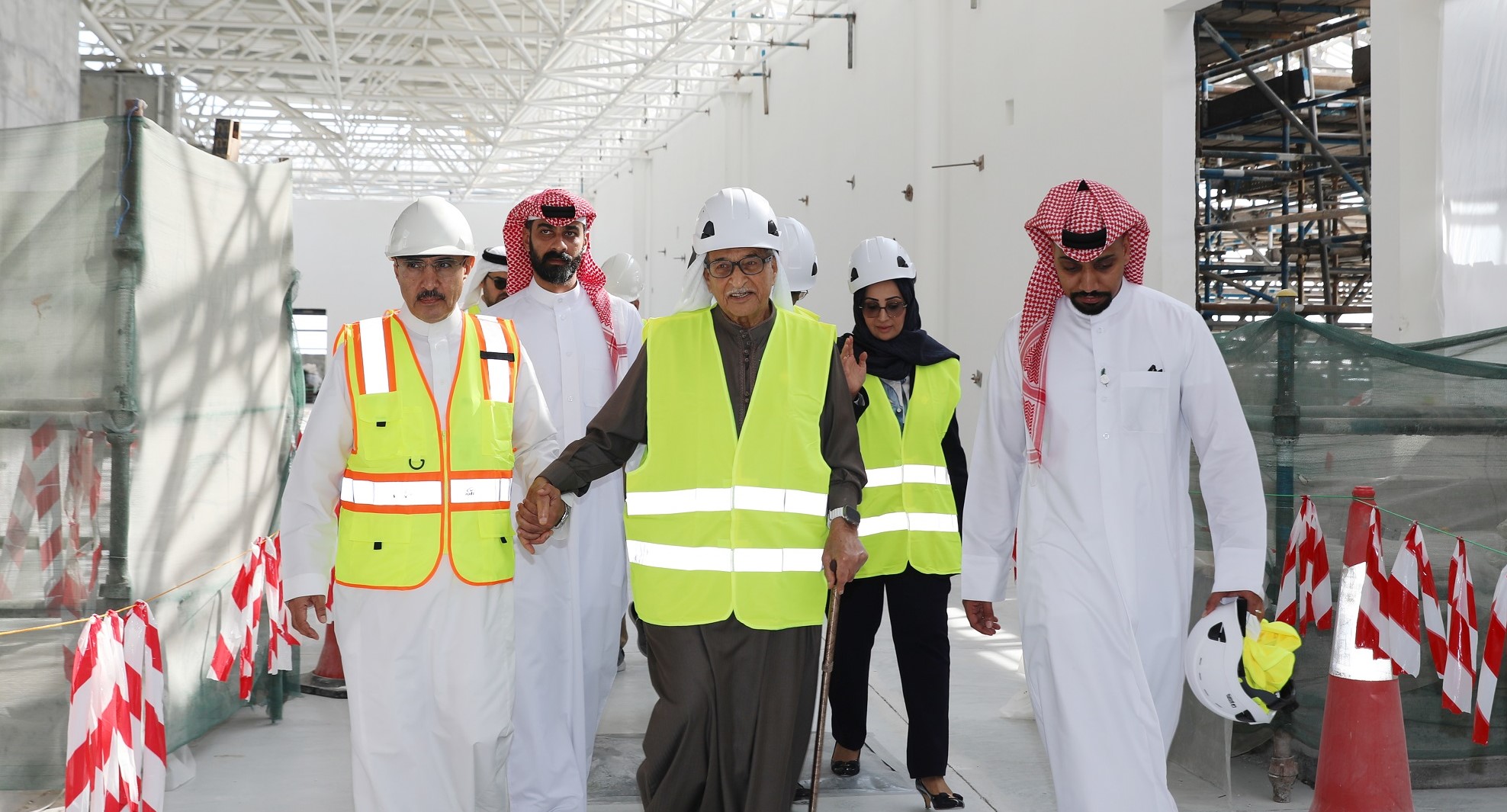
His Excellency Lieutenant General Dr Shaikh Mohamed bin Abdullah Al Khalifa, Chairman of the Supreme Council of Health (SCH), visited the King Abdullah bin Abdulaziz Medical City project, one of the Kingdom of Bahrain’s most prominent healthcare initiatives. During the visit to the site in Durrat Al Bahrain, Southern Governorate, he was briefed on the construction progress and inspected the state-of-the-art intensive care facilities. He was accompanied by His Excellency Engineer Ibrahim bin Hassan Al Hawaj, Minister of Works, Her Excellency Dr Jaleela bint Sayed Jawad Hassan, Minister of Health, alongside several undersecretaries and senior officials from health and engineering sectors, in the presence of His Excellency Dr Saad bin Saud Al Fuhaid, President of the Arabian Gulf University (AGU).
His Excellency Lieutenant General Dr Shaikh Mohammed bin Abdullah Al Khalifa affirmed that the establishment of King Abdullah bin Abdulaziz Medical City embodies the deep, distinguished, and fraternal relations between the Kingdom of Bahrain and the Kingdom of Saudi Arabia. He stressed the ongoing bilateral cooperation in the health and education sectors, praising the joint efforts to expand this partnership in line with the directives of His Majesty King Hamad bin Isa Al Khalifa, King of Bahrain, and the Custodian of the Two Holy Mosques, King Salman bin Abdulaziz Al Saud, King of Saudi Arabia.
He stated, "This vital project enjoys the support of the Saudi-Bahraini Coordination Council, chaired by His Royal Highness Prince Salman bin Hamad Al Khalifa, Crown Prince and Prime Minister, and His Royal Highness Prince Mohammed bin Salman bin Abdulaziz Al Saud, Crown Prince and Prime Minister of Saudi Arabia.” He further commended the significant efforts of the Saudi Fund for Development (SFD) and its continuous support for strategic development projects in Bahrain. He expressed appreciation for AGU’s commitment to maintaining the highest quality standards throughout the project’s implementation.
For his part, His Excellency Dr Saad Al Fuhaid expressed his deepest gratitude to the Custodian of the Two Holy Mosques, King Salman bin Abdulaziz Al Saud, and His Royal Highness Crown Prince Mohammed bin Salman Al Saud, as well as to His Majesty King Hamad bin Isa Al Khalifa and His Royal Highness Prince Salman bin Hamad Al Khalifa. He noted that their support for this project embodies the shared strategic vision of both nations. He acknowledged the role of SFD throughout the implementation phases of the project which has reached a major construction milestone and anticipated completion by the end of 2026, establishing the Medical City as a landmark for medical innovation and scientific research in the region.
He noted AGU’s prioritisation of this project to ensure that it meets international standards, honouring the generous donation of the late King Abdullah bin Abdulaziz Al Saud, and supporting His Majesty the King of Bahrain’s vision for the future of the health sector.
The city is expected to create over 1,000 job opportunities, enhancing medical training and research, and transforming Bahrain to a leading regional healthcare destination offering unprecedented specialised services.
During the visit, Engineer Khalid Ibrahim, the project supervisor, reviewed the development phases, noting that the facility occupies approximately 82,000 square metres within a total land area of one million square meters. He indicated that the first phase includes the operation of a teaching hospital.
Dr Shaher bin Dhafer Al Shehri, CEO of the University Medical Centre at King Abdullah bin Abdulaziz Medical City, described the project as a pioneering model of developmental cooperation contributing to the empowerment of medical personnel, the training of students, and the provision of comprehensive healthcare according to international standards. The project will feature specialised medical facilities with a capacity exceeding 280 beds, enhancing the national healthcare system and contributing to the Sustainable Development Goals.