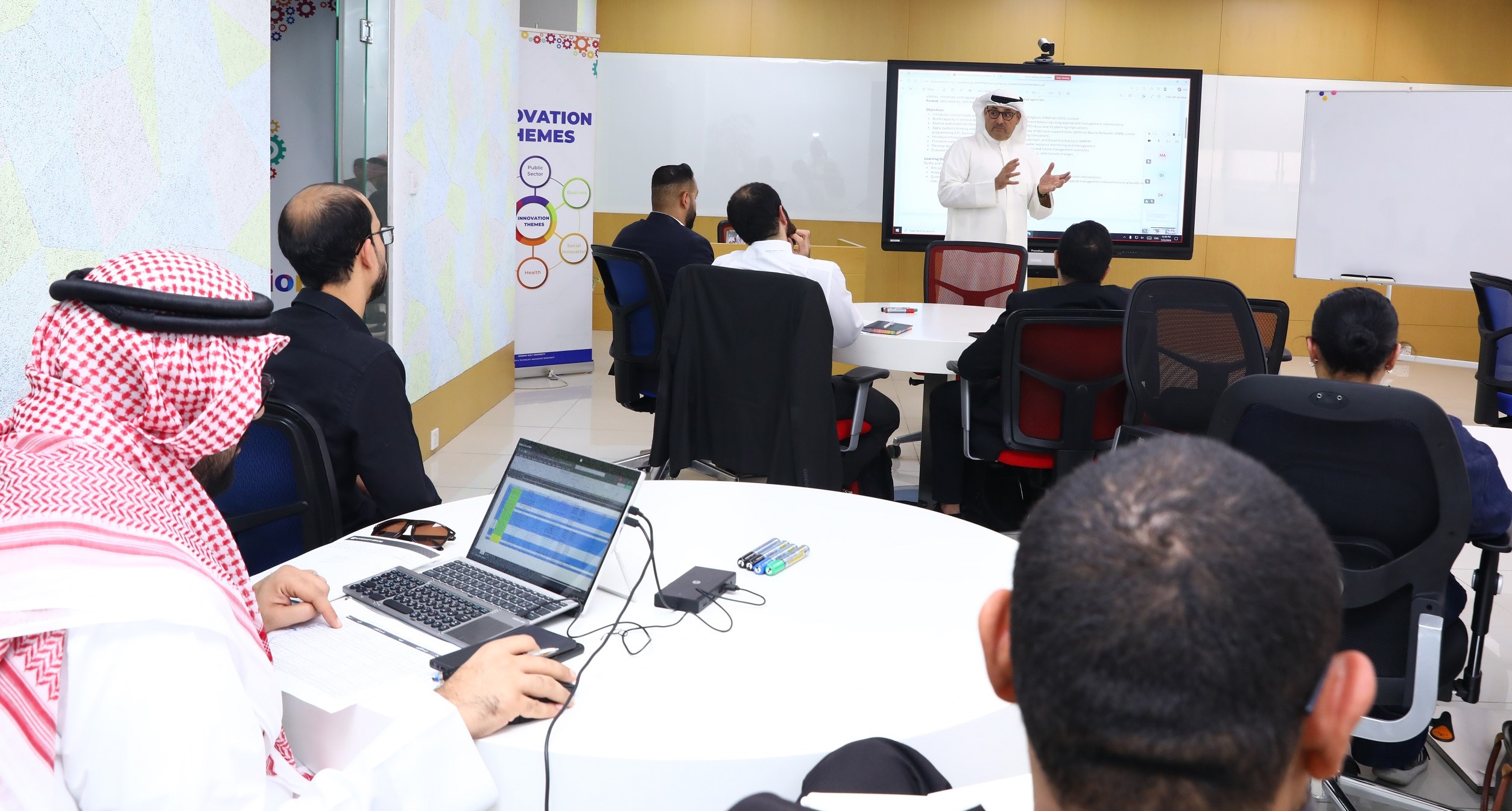
In collaboration with the Permanent Technical Advisory Committee of the Water Resources Council and the Arabian Gulf University Supreme Council for Environment launches second training programme on Integrated Water Resources Planning and Management with
Arabian Gulf University
03 Aug, 2026
The Supreme Council for Environment (SCE), in collaboration with the Permanent Technical Advisory Committee of the Water Resources Council and the Arabian Gulf University (AGU), has launched the second training programme entitled "Integrated Water Resources Planning and Management". The programme forms part of the project to strengthen the institutional capacity of the Water Resources Council to address climate change challenges, with support from the Green Climate Fund (GCF).
The four-month programme, which runs until 12 November, brings together 20 promising Bahraini specialists and engineers in early- to mid-career management positions from various government entities. The programme is delivered by six faculty members from the Arabian Gulf University.
On this occasion, Engineer Laila Ali Sabeel, Director of the Climate Change and Sustainable Development Directorate at the Supreme Council for Environment, stressed that adopting integrated water resources planning constitutes a fundamental pillar for advancing the sustainable management of Bahrain's water resources. She noted that the approach supports evidence-based decision-making through the use of modern scientific tools, including modelling, simulation and resilience-building methodologies, thereby enhancing water resources management efficiency, promoting environmental sustainability and strengthening water security.
She added that institutional integration among the Permanent Technical Advisory Committee of the Water Resources Council, the Supreme Council for Environment and the entities responsible for water resources management continues to ensure the effective and sustainable governance of the water sector. This collaborative approach aligns national efforts towards integrated and sustainable water resources management in the Kingdom of Bahrain, particularly in light of the growing environmental challenges associated with climate change. She also commended the partnership with the Arabian Gulf University and its significant role in strengthening national capacities by delivering specialised training programmes that support applied research and equip Bahraini professionals with the latest planning and management methodologies and tools, thereby enhancing evidence-based decision-making and the development of effective, knowledge-driven environmental policies.
For his part, Dr. Waleed Khalil Zubari, Professor of Water Resources at the Arabian Gulf University and the programme's lead trainer, said the initiative carries significant strategic importance for Bahrain's water sector. It aims to prepare the next generation of water leaders to apply the principles of integrated water resources planning across water sources and uses, while taking into account the interlinkages between the water, energy, food and environmental sectors. Participants will be trained in mathematical modelling of these interactions and in designing effective interventions to achieve a balance between water supply and demand. The programme also introduces a range of decision-support tools, including linear programming, artificial neural networks and probabilistic modelling.
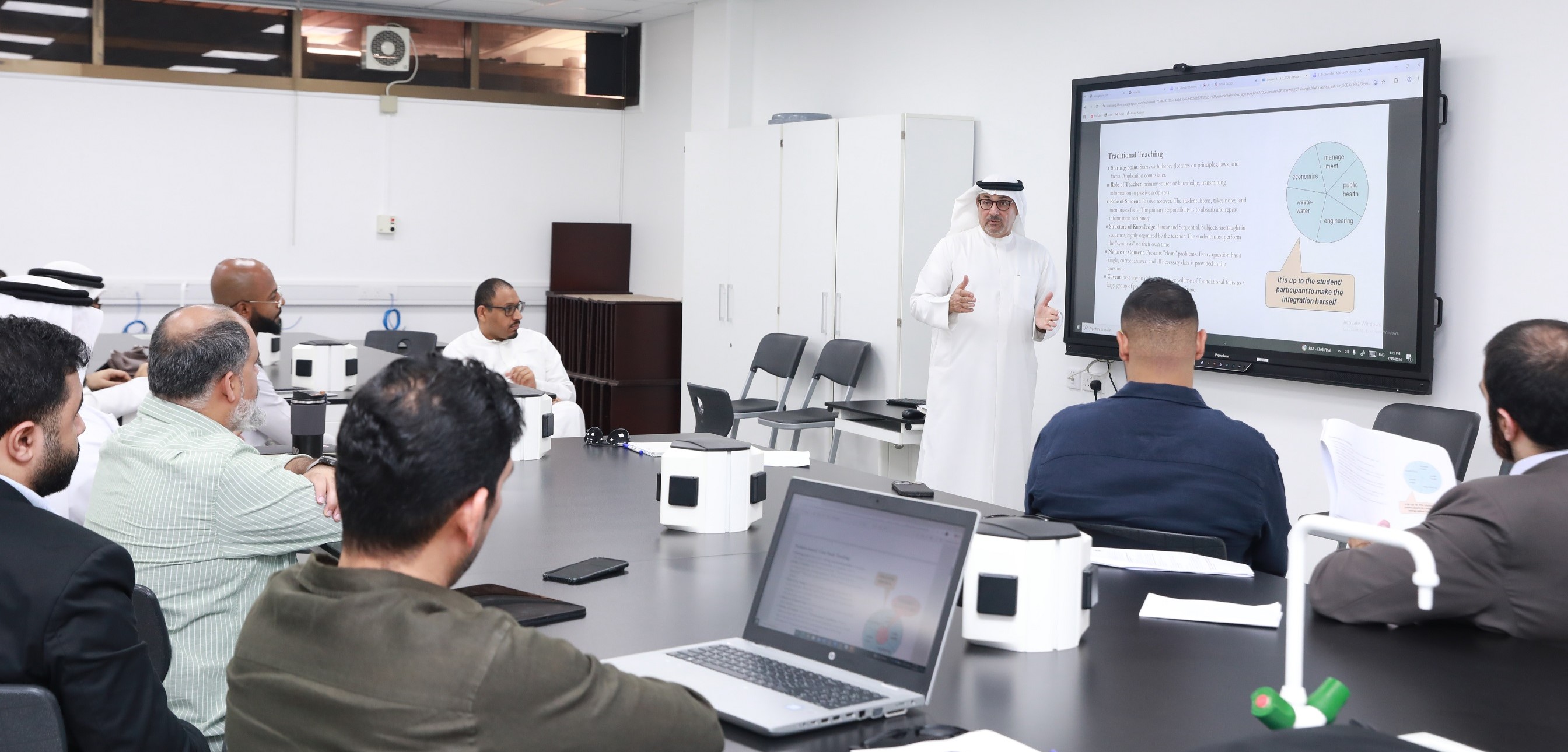
Dr. Zubari added that the programme provides participants with training in the application of emerging technologies—including artificial intelligence, blockchain, the Internet of Things (IoT), cybersecurity, and the integration of Geographic Information Systems (GIS) with artificial intelligence—to water resources management. It also covers dynamic mathematical modelling of Bahrain's water sector, simulation of future scenarios, and assessment of trade-offs and policy impacts on the country's water resources.
He further explained that the programme has been designed to equip participants with practical and applied skills that will enable them to make meaningful contributions to water resources management. As part of the programme requirements, participants will work in teams on a comprehensive case study encompassing all stages of the planning process, from data collection and dynamic modelling to scenario development, results analysis, and the presentation and defence of proposed solutions before peers and instructors.
The programme seeks to strengthen participants' capabilities in integrated water resources planning and management within the context of Bahrain's water sector. It focuses on forecasting sectoral water demand, balancing supply and demand, modelling the water-energy-food-environment nexus, and applying advanced decision-support tools such as artificial neural networks, linear programming, decision trees and Monte Carlo simulation. Participants will also explore emerging technologies, including artificial intelligence and blockchain, while learning to utilise Geographic Information Systems (GIS) and geospatial intelligence for monitoring and management. In addition, the programme covers the development of dynamic models to simulate future scenarios and evaluate trade-offs and policy impacts under changing climatic, social and economic conditions.